


Connecting Communities across the Triangle
Now serving more than 232,000 Nextdoor Neighbors in the heart of North Carolina
"BRINGING THE BEST OF NORTH CAROLINA TO YOUR FRONT DOOR"

WHY DO FIREFLIES LIGHT UP?
By Lee Romano Sequeira of Off the Vine PR

FIREFLIES LIGHTING UP THE NIGHT A PLEASANT SIGNS THAT SUMMER HAS ARRIVED.
WHAT’S BEHIND THEIR SPARKLING FLIGHTS?
WHAT CAN WE DO TO BRING MORE OF THESE LIVING NIGHTLIGHTS TO OUR YARDS?

There are approximately 2,200 known species of fireflies worldwide, and there may be several thousands more that still need to be documented and named. They are most abundant and diverse in the tropics.
In North America, there are around 130-140 known species of fireflies and about 35 of these are currently known to live in North Carolina, and we probably have several other species that are still unnamed in our state.
How does the weather affect fireflies?
While most fireflies are active as adults during the spring and early summer, at least one of our day-fliers can be found in large numbers on mild days in January and February, and they mate in March.
One of our larger flashing species can be seen in treetops in North Carolina on mild nights in March. However the main firefly season in our state is from early May through July.
What is the firefly life cycle?
Fireflies start life as eggs laid in soil or under leaf litter. In most cases, the eggs hatch in 3-4 weeks, and tiny larvae begin feeding shortly thereafter.
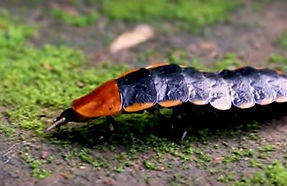
Most fireflies spend the bulk of their life as predaceous larvae living in or on top of the soil. They feed on other invertebrates, including snails, slugs, earthworms, and insects.


Most species spend roughly a year as larvae, although some appear to be larvae for two years. At the end of their larval life, they transform into pupae in soil cells.
After 3-4 weeks the adults emerge (males usually emerge first), finish maturing, and mate. Few live longer than 2-4 weeks as adults.
How do fireflies reproduce?
Fireflies reproduce fairly conventionally (for insects). Males mount females, then engage their genitalia with their claspers to ensure fertilization is completed.
Some fireflies differ from other insects in that the duration of copulation can be as long as 10-12 hours. This lengthy period is needed to facilitate the transfer of a large nuptial gift the male provides the female- a large packet of nutrients for egg production and toxins for egg protection.

Why do fireflies light?

It is certainly true that Bioluminescence (the production and emission of light by a living organism through a chemical reaction) is thought to have originally evolved as a warning signal to predators, saying “don’t touch me, I have nasty chemicals that will hurt you if you do.”
However, most adult fireflies use their ability to make light for communication with others of their kind.
Firefly larvae around the world glow, advertising their toxicity as they crawl across the ground hunting for snails and slugs.
How do fireflies produce light?
Fireflies are able to produce light in what we call “lanterns” which are special organs located in their abdomens. The actual process relies on chemicals called luciferins, which are oxidized by the enzyme luciferase, and as a result, produce light in bioluminescent organisms.
This sounds quite complicated but essentially all the chemical energy that goes into the process comes out as light, making it an extremely efficient process.

Why are their lights different colors?
The luciferins and luciferases I previously mentioned are families of chemicals; slightly different versions often produce different colors of light. The pH (acidity or alkalinity of the lantern) also can affect the color of the light.
What about their mating flash patterns?

While light may still have a warning function for adult fireflies, they mainly use their ability to produce light for sexual communication.
In most species of our fireflies, the males emit species-specific flash patterns that advertise them to the right female. Females have a species-specific response signal as well. In many species, the males engage in the risky business of flying around and advertising themselves, while the females watch for them from the relative safety of the ground or vegetation.
The males flash their species male signal, and the females respond with the appropriate response flash. They keep calling and responding until the male lands near the female, approaches her, and if everything is good, they mate.
What is “Femme fatale” behavior amongst fireflies?
In one group of our fireflies, mated females mimic the flash pattern of the females of other species of fireflies in the area, and trick males to come close to the female so that they can eat them! These are referred to as the“femme fatale” fireflies. They do this to harvest protective toxins from their prey.
Research has found that the female seems to derive some nourishment from the digested male that she can use to make eggs, but perhaps more importantly, she acquires toxins that males manufacture, which she can then use to protect herself and her eggs from predators.

Do all fireflies light up?
The answer is that approximately 25 to 30 percent of all fireflies are day-flying species and don’t exploit bioluminescence for sexual communication. Instead, these species appear to rely on pheromones for their communications.
What are pheromones?
Pheromones are chemical signals that can be used for communication between members of the same species. They are often associated with sexual attraction, but can also trigger various other behaviors like alarm responses, mate selection, or territorial marking.
While pheromones are well-documented in many animal species, including insects and mammals, the role and existence of pheromones in humans is a subject of ongoing research and debate.
What about firefly feeding habits?

Fireflies are vigorous predators.
As larvae, and they feed on other invertebrates like snails, slugs, earthworms, and other small creatures in their habitat. Most don’t feed as adults, but there are exceptions, like the femme fatales we mentioned earlier.
The snails and other larvae that fireflies are hunting are often found in leaf litter, as this provides good cover for them. So, if you want more firefly adults moving around in your yard, what you really need is more leaf litter for the larvae to run around and grow in.
No leaf litter means no fireflies!
What about lighting habits in early stages of firefly development?
In many species, the eggs, larvae, and pupae all glow.
The eggs may emit a faint glow. Most larvae, often referred to as "glow-worms," glow, and they may glow more intensely when they are irritated. The luminescence in larvae is thought to serve as a warning signal to predators, indicating their unpalatability due to the presence of toxins.
And of course, firefly pupae are also capable of glowing, particularly when disturbed.
What about continuous glowing versus flashing on and off?

Most of the species that produce light through bioluminescence are flashers, and they use their signals to communicate. Ghost fireflies are exceptional in that males may keep their lights on for quite a long time (15-over 60 seconds) at a time before a variable-length dark period.
Flashing species each have their own calling pattern and color while the continuously glowing species may vary in the intensity of their glows.
While we think we have a good understanding of the flashing type of communication, there are still many questions about those that glow more or less continuously- and they may be accomplishing multiple goals with a single signal.
What about firefly evolution and long-term changes in the various species?
One of the major things that have been found was that light production was present early on in larvae, but was not co-opted for sexual communication in adults until several million years later.

What are some of the major differences between types of fireflies?

One important note is that different firefly species have different flight seasons, night-time activity patterns, and habitat preferences. Some prefer treetops, while others prefer open habitats like fields and lawns.
While many folks are very familiar with the dusk-flying, Common Eastern Firefly or “Big Dipper,” Photinus pyralis, there are lots of other species to learn about if one looks in a variety of habitats at different times of the night and year!
What are some of the habitat preferences of fireflies?
Many species rely on intact, mature forest ecosystems of one sort or another; among these some prefer bottomlands (or even swamps!) while others use open hardwood forests and still others, conifers. We see these preferences because different species have evolved to exploit different niches as larvae and as adults.
What are Blue Ghost Fireflies?
Blue ghost fireflies are tiny species that belong to the genus Phausis.
Most species in this genus have dark males and glowing females, but at least three have glowing males as well as glowing females. These species are quite unusual in that the males keep their lights on for prolonged periods of time while they fly over the forest floor looking for females, rather than using flash patterns to call for mates.

The fact that their lights may appear to be on for long periods of time combined with the fact that it is often dark or at dusk when they are out and about probably greatly contributed to their being called “ghosts.”
And while they are called “blue” ghosts, their lanterns are actually green; an optical illusion called the Purkinje Effect causes faint green lights to look blue at a distance to human eyes.
What are typical Blue Ghosts activity and mating habits?

It seems that the males fly over the forest floor about an hour after sunset with their lights intermittently on for prolonged periods, while the females perch at the mouths of their little burrows with their abdominal light organs pointed to the sky.
When a male finally sees a female that is on the forest floor, he will drop to the ground and attempt to mate with the female.
The females ghost fireflies are called larviform - they are wingless creatures that look like firefly larvae- no wings, soft exoskeleton, and pale in color.
Are there Blue Ghosts in North Carolina?
We have Blue Ghosts in our mountains that are active in May into early June, and then again in early July.
Blue Ghosts can be found in many places. Including our state’s foothills and mountains. These are usually found in moist mature woods often near streams. In the Piedmont, another, and potentially undescribed species of ghost, is active in late April and early May, and these prefer somewhat drier woods.

What part does climate change and development play in regard to Blue Ghosts?

We believe that climate change threatens blue ghosts and other fireflies by disrupting the lifecycles they’ve evolved from over millennia. Weather extremes associated with climate change can also cause direct mortality- for instance, severe droughts can have significant effects on larval populations, while flooding can destroy local habitat for them.
And as one might expect, more development fragments and displaces firefly habitat, and developed areas also tend to have more light pollution at night, which disrupts firefly behavior.
How can we helping the survival of our Blue Ghosts and other types of fireflies?
First and foremost, habitat preservation is essential- if they have no place to live, then they simply disappear. And remember, different species rely on different habitats!
Second, the reduction and restriction of light pollution is crucial to their continued survival. Fireflies use light to communicate and find mates- if they can’t see each other, they don’t get together.

Third, limiting the use of pesticides, particularly insecticides, in firefly habitat is important. While fireflies may respond differently to common insecticides from other insects, many insecticides are nevertheless quite toxic to them.
What can we do as individuals, in our yards and on our properties to help fireflies?
Folks can encourage fireflies by helping maintain firefly habitat. Many fireflies dwell in and just under the leaf litter as larvae, so keeping areas of leaf litter under trees is good. If one has a substantial area of land, maintaining a diversity of habitats will encourage a diversity of fireflies. And limiting pesticides and extraneous outdoor lighting will also help the insects.
What is the effect of artificial outdoor lighting?

In general, it is not good for fireflies. Homeowners who wish to help fireflies should limit outdoor lighting as much as feasible when the adults are out and active; try to have the lights on only when they need to be on.
We wish to thank NC State University for its contributions to this Blog
and the North Carolina Museum of Natural Sciences for its review.
This blog courtesy of your Northeast Durham RPP Volunteer and Certified Social Media Strategist
Lee Romano Sequeira of Off the Vine PR