


Connecting Communities across the Triangle
Now serving more than 232,000 Nextdoor Neighbors in the heart of North Carolina
"BRINGING THE BEST OF NORTH CAROLINA TO YOUR FRONT DOOR"

CONSERVING OUR RED WOLVES IN THE WILD – ONE WOLF AT A TIME!

NORTHEASTERN NORTH CAROLINA IS THE ONLY PLACE IN THE WORLD
WHERE RED WOLVES LIVE IN THE WILD.

Kim Wheeler is the Executive Director of the Red Wolf Coalition, located in Columbia, NC. Since taking the leadership role in 2005 for the Coalition, Kim has kept the organization focused on the tough and ever-changing challenges of red wolf restoration and conservation. She lived and works in the heart of red wolf country in northeastern North Carolina where she is a community leader as well as a red wolf advocate and educator. Kim is the 2009 recipient of the “Who Speaks for Wolf” award from the International Wolf Center and the 2016 recipient of the Roosevelt Ashe Outstanding Educator in Conservation.

Alexis Hinchliffe has been the Education Manager at Champions for Wildlife since 2023. Prior to joining Champions for Wildlife, she was an English Language Arts teacher, where she combined literacy, storytelling, and environmental education in the classroom. In her work, Alexis develops arts-integrated curriculum and educational programming centered on native wildlife species and habitats, helping students and communities build meaningful connections to the natural world through hands-on learning. She is passionate about inspiring curiosity about wildlife and creating meaningful experiences for the next generation of conservation advocates.
Kim, it is so good to talk to you again, this time to get your perspective about the incredible journey of our wild Red Wolves. As you know, at Champions for Wildlife, so much of our work is focused on helping kids build meaningful connections with wildlife through animals like pollinators, bats, hellbenders, birds — and of course Red Wolves. Your dedicated focus on Red Wolves gives you such a unique perspective, and we’re excited for more people to hear more about this remarkable species and the work being done to protect it.
As we get started, I want to say that it seems that we often hear about a species endangered or even on the brink of extinction, often the result of natural selection and environmental changes. In the case of Red Wolves, what would you say were the reasons for decline?
Alexis, clearly the reduction in their natural range and decline in survival rates are largely due to the actions of humans.
The original range of the Red Wolf extended from the Atlantic and Gulf coasts, north to the Ohio River Valley, then through central Pennsylvania and New England, and finally west to Missouri and Texas. This extensive range was primarily reduced due to regulated hunting and land development.

Credit: Randy G Lubischer
Kim, I have heard that Red Wolves have lost more of its historical territory, as much as 99%.
Yes, the reduction in the Red Wolf’s historical territory has certainly been significant. Aggressive predator control programs and the clearing of forested habitat at one point brought the Red Wolf to the brink of extinction.
And why is it so important to try to preserve this species?
We feel that all member of an ecosystem, including predators, are important to preserve if we are to be good stewards of the land. In the case of our Red Wolves, it was clearly human intervention rather than natural causes that caused their decline.
This being the case, it is especially important that we do our best to prevent their extinction and restore the ecosystems where they lived.
Thank you for explaining this, it is so important to know that “we”’, and not nature, are the problem here. Before we go any further, are there any general characteristics about Red Wolves that you can share with us?

Of course there are many, I will mention just a few that may be of interest to you.
While their diet may include larger animals like white tail deer, small rodents and nutria are also very important. As you can imagine, catching small prey is much easier for them than chasing down a deer.
And both open fields and forested areas are places where their prey live. Our development of these natural resources greatly contributes to the reduced food supply for red wolves.
Credit: Aspen Stevanovski
Another interesting fact is that they do not hibernate and are active all times of the year. And they are more active at night and use the farm fields and shaded areas to escape from summer heat.
What about their pups?
Adults mate for life and their pups are born in the spring, average litter is 3-5 pups. Pups stay with their parents until they are 18-24 months old. During that time, the breeding pair may have a second litter and may need the help of the yearlings to help raise the new pups.
Wild pups are born in dens which might be a hole in the ground, a hollow fallen tree, or a deep thicket. The breeding male will bring the breeding female food during her denning time.

Credit: Robert Wilcox, Museum of Life and Science
Fascinating! Anything else you want to tell us about the pups?
These young pups cannot regulate their own body temperatures, so they need mom to keep them warm. Learning how to survive in the wild begins very early with pups.
Back in 1851, Canis rufus, the scientific name for the Red Wolf, was first designated and categorized. What was the significance to this distinction?
Historically, the Red Wolf has been plagued by the public perception that it is not a unique species, but a hybrid of the gray wolf and coyote. The fact that Red Wolves and coyotes can breed and produce fertile offspring has added to this perception.
As noted by this scientific distinction, and by a study done in 2019 by the National Academy of Sciences, it was formally confirmed that the Red Wolf is indeed a unique species

Credit: Aspen Stevanovski
What about the first indication that the Red Wolf might be in danger of extinction?

Credit: US Fish & Wildlife Service
Alexis, an excellent question!
It was actually the US Fish & Wildlife Service (USFWS ) that first sounded the alarm that the Red Wolf was disappearing from the landscape. Its historical range had dwindled down to a few small areas in Texas and Louisiana.
USFWS field biologists working there discovered that there were some canids there that were larger than the regional coyote population.
They took measurements that included body, leg, feet, tail, head, muzzle size, and weight and thus were able to determine that these were Red Wolves, not coyotes!
It is interesting to note that all of this happened without the use of current DNA analysis. The measurements that they used then are still recognized today and help biologists accurately identify the different types of canids in the wild.
Can you give us an example of one of the current issues that faces restoration and what is being done to resolve it?
You might be surprised to learn that at the current time, road mortalities are the number one cause of Red Wolf deaths, so finding ways to keep them away from roads is critical if we are to save and grow the species. The USFWS continually works on techniques to encourage Red Wolves to stay far away from major roads.
A grant for a wildlife crossing on a portion of Hwy 64 has received funding and was the result of a multi-agency effort. This project will require a lot of outreach to the local community as their input on this project is important. Anticipated completion of the project is 2031.

Credit: Nancy Arehart
I would also like to add that a wildlife crossing like this will not only benefit Red Wolves, but other types of wildlife as well, and motorists that travel on a very busy part of Hwy 64.
Let’s visit the late 1970s for a minute. There was back then what has been called a “last-ditch" effort
to prevent the species from vanishing forever that involved capturing the last remaining Red Wolves in the wild. This may seem somewhat counter-productive to saving this species from absolute extinction. What can you tell us?

It was felt that capturing the last remaining Red Wolves in the wild was necessary to prevent their permanent extinction caused by several factors including intense predator control programs, habitat loss, and hybridization with coyotes.
By 1980, the initiative to capture the few remaining wild red wolves had succeeded and as a result literally forced the Red Wolf into extinction in the wild in order to secure a foundation for future captive breeding.
Credit: Brittany Avery
Fascinating! Is there anything about this effort that you can share with us in more detail?
In the 1970s, the species was reduced to a tiny, declining population along the Gulf Coast of Texas and Louisiana and without intervention, the species would completely disappear.
Also, as Red Wolves disappeared, they were increasingly forced to mate with coyotes due to a lack of mates of their own species. Capture was necessary to identify the few Red Wolves and separate them from hybrids, ensuring the species' genetic integrity.

Area of declining population
When we talk about capturing all of the remaining Red Wolves in the wild, what kind of numbers are we talking about?
I understand that although more than 400 wild Canids were captured in this endeavor, it was determined that only 43 of these were considered potentially Red Wolves. Subsequent testing determined that only 14 of the 43 met the criteria developed to start breeding in captivity, making the effort a success.
So only 14 of all the wolves that were captured were found to be suitable – We are glad this capture did not wait any longer. What about the methods used to capture them?
Alexis, leg hold traps were the primarily method used to trap them.
Once the population was removed from the wild, they were sent to Point Defiance Zoo & Aquarium in Tacoma, Washington where the captive breeding program began.
The goal of this program, now called Saving Animals from Extinction (SAFE), is to preserve Red Wolf genetic diversity and to provide Red Wolves for restoration into the wild.

Credit: Brittany Avery
Kim, do you think that there may be any Red Wolves that are still in the wild, perhaps missed in the effort to capture all of them?

The question of whether there are any remaining Red Wolves in the Texas and Louisianna has long been asked, and researchers continue to look at the canid population in those areas.
As a result of the public and science communities’ interests, the larger canids found in Texas and Louisianna have been the focus of research (including DNA testing) to determine the genetic ancestry of these animals.
DNA testing
Are there any resistances to the efforts to protect and restore our Red Wolves in the wild?
Like any other top predator, there has been frequent opposition to the Red Wolf’s existence in the wild.
There have been groups and individuals that have been vocal about ending the USFWS Red Wolf Recovery Program. Some have even taken their efforts through the courts system and others have worked door to door to hinder the recovery efforts of the Red Wolf.
This is very surprising and a bit disconcerting as well! What may be some of the motivations and justifications for these actions?
Alexis, there are several reasons for this opposition.
Some of the major concerns are over private property rights, fear of government overreach, livestock threats, and competition with deer hunters. There is also the argument that this program may be an inefficient use of tax dollars, noting the species' high hybridization with coyotes.
What can be done to counter or eliminate these objections?
Working towards open communication and the publication of accurate information from the USFWS Red Wolf Recovery Program continues to be an important part in changing attitudes with locals that live with red wolves.
In this respect, the USFWS Recovery Program has many partners, local, state, and national groups that are working to better education the public about Red Wolf conservation. These collaborative partnerships are a key component in finding places for the Red Wolf to survive in the wild.

Credit: Randy Lubischer
How successful would you say The American Red Wolf SAFE (Saving Animals From Extinction) program is?

Credit Chris Lucash
They have been very successful. The goals are to support conservation efforts by maintaining a healthy and viable population of Red Wolves, growing education and awareness efforts, and aiding research vital to supporting recovery and management. Another focus of the SAFE program is maintain the genetic integrity of the Red Wolf population.
The SAFE program is a very successful program that saved the Red Wolf from extinction and is an important part of Red Wolf recovery effort. The reintroduction into the wild was started with just four pairs of captive born wolves.
The SAFE program continues to provide animals for release into the wild and adult releases continues to be an important part of the success of Red Wolf conservation.
Can we discuss captive breeding now?
Red Wolves that were released into the wild were all captive born and came out of the population that was previously removed from the wild. Facilities used for captive breeding range from small habitats to one that can house Red Wolves in a 12-acre habitat.
Pup fostering is also another management strategy developed by the USFWS Red Wolf Program that helps to boost the genetic integrity of the wild population. A female in in the SAFE program and in the wild must have given birth within days of each other. A pup from the SAFE litter is taken from the litter and placed in a wild den.

Credit: Kaylee King, Great Plains Zoo
Every time a pup has been fostered into the wild, it has been accepted by its new family. Pup fostering typically occurs before the pups have opened their eyes, about 10-12 days of age.
Can you please tell us where the first release of the Red Wolf into the wild was?

The first release back into the wild was a total of four pairs of captive-bred Red Wolves in September of 1987, at the Alligator River National Wildlife Refuge on North Carolina's Albemarle Peninsula. Perhaps coincidently, this refuge is less than an hour from our offices in Columbia (NC).
This of course was the first time a large carnivore, declared extinct in the wild, had been reintroduced into its natural habitat in the United States.
Credit: Eve Turek
What would you say were the reasons why we were honored to have the first release in our own state?
Alexis, I believe the Alligator River National Wildlife Refuge (ARNWR) in North Carolina was selected for initial Red Wolf reintroduction because it offered a large, isolated area (over 100,000 acres) with ample prey, low human population density, and an absence of coyotes at the time.
And with it being largely isolated by water on three sides, it was seen as a secure, suitable environment to reestablish a self-sustaining population.

Credit: Bob Bowen
We understand that at one time, some Red Wolves were introduced into in the Great Smokey Mountain National Park. Are they still there?

Yes, a Red Wolf second recovery site was established in the Great Smokey Mountain National Park in 1989, and the first wild pups were born there in 1992.
Regrettably, this population had low pup survival rates and the inability of these wolves to establish home ranges with the Park resulted in the project being cancelled in 1998.
GSMNP welcome sign
Were there any other North Carolina sites where Red Wolves were released into the wild?
There was an additional release into the Pocosin Lakes National Wildlife Refuge in 1993. This followed the initial reintroduction of the species into the nearby Alligator River National Wildlife Refuge, which I mentioned earlier. This additional release was part of the ongoing effort to establish a wild, experimental population in the eastern part of our state.
This refuge, along with the adjacent Alligator River National Wildlife Refuge, are home to the only known wild population of red wolves.

PLNWR welcome sign
I think that we all now understand what a Red Wolf release site is – where they are finally put back into the wild to see if they can survive and even reproduce. But we understand that there are also propagation sites as well. What makes a propagation site different from a release site?

Propagation site
Propagation sites are used as controlled environments where Red Wolves can hone their wild instincts in anticipation of their later release into the wild.
St. Vincent National Wildlife Refuge in Florida serves as a critical "propagation island" for Red Wolves. Established in 1990, the program allows pairs to breed and raise pups in a natural, predator-free environment, preparing them for later release into the wild in North Carolina when they are about two years old.
Are there any current issues now that Red Wolves here are thriving and their populations are increasing?
We talked about road mortalities earlier as being the number one cause of Red Wolf deaths. In addition, the concern of landowner’s rights, including fear of wolves and safety, are key components to recovery for the Red Wolves. Current regulations allow for the take of a Red Wolf if a person feels that they are being threatened by one of them. This also covers property being threatened. To date, no one has been prosecuted for the killing of a Red Wolf.
At this time, the life expectancy of Red Wolves in the wild is rarely longer than 6 or 7 years, but can be up to 15 years in captivity. Do you feel that the efforts to help the red wolf may eventually increase their life spans in the wild?

Life in the wild for any animal is challenging.
Living with humans, finding suitable habitat and prey availability can be a challenge for any species. All these factors contribute to a shorter life span for Red Wolves as compared to their living in captivity.
Credit: Kaylee King
Kim, did the Red Wolf reintroduction program in any way help with the introduction of any other endangered species back into the wild?
Another good question.
I believe that what we have learned has certainly helped develop management plans that increases the chances of the survival for other endangered species when the goal is introduction back into the wild.
One excellent example is the USFWS Mexican Wolf program. The Red Wolf program had developed several management “firsts” which were later also used in this program.

Black footed ferret
The cross-fostering of pups and strategies to increase genetic diversity in the Red Wolf program have been key the success of the Mexican Wolf Program. The black footed ferret program also benefited from some of the “firsts” developed by the Red Wolf Program.
Is anything being done to track individual Red Wolves once they are released into the wild?

Yes, every red wolves that is released into the wild is fitted with an orange tracking collar. These collars are in the form of a GPS or VHF radio collars. These collars are essential for monitoring their survival, movements, and interactions with other wolves in the wild.
Credit: Amy Smotherman Burgess
It has been estimated that nationwide, there are more than 50 institutions which are involved with Red Wolf conservation. Can you tell us what your Red Wolf Coalition does to complement the efforts of these groups and fill in gaps between their efforts and contributions?
Our primary focus is on public outreach, education, and advocacy to foster support for red wolf conservation and provide accurate science-based information about the species. This is so very important in our geographical area since the release sites are close to us.
I would say that we are a unique partner in Red Wolf conservation because we focus on the Red Wolf relationship to the landscape and communities where it lives.

Credit: Victoria Zigler, Endangered Wolf Center
What can you tell us about the beginning of the Red Wolf Coalition?
The Coalition was established in 1997 by a U.S. Fish and Wildlife Service biologist that recognized a need for expanded education and outreach beyond what was already being done in our area.
While there are many organizations working hard for Red Wolves, we are headquartered in Red Wolf country and gives us the advantage of understanding the local culture and the opportunity to become part of the community in ways other than just Red Wolf conservation.
Kim, what can you tell us about one of the first initiatives of the Coalition at the time that it was formed?
I was not part of the Coalition at its inception, but I do know that an important part of our mission was to provide additional “bodies” to talk with locals in the recovery area about the Red Wolf program goals and objectives.
As one might imagine, having a government employee knocking on your door wanting to talk to you about the release of wolves in your area might cause some uneasiness in the recovery communities.
As a non-government organization, the Coalition was able to help ease resident’s concerns without the pressure of having to talk to a federal government employee.
Do you think that any of the Coalitions goals have changed over the years?

Credit: Champions for Wildlife
Our advocation for the long- term survival of Red Wolf populations by education and by fostering public involvement has always been, and continues to be our guiding force.
As our outreach programs are developed each year, we continue to evaluate how we present our message and more importantly, we have learned to be better listeners. If any form of coexistence will be achieved, we must listen to objections and collaborate with stakeholders to find a place for the Red Wolf in the wild.
What about your close proximately to the release sites? Does this help you achieve your goals?
Living and working near where Red Wolves live certainly helps us in understanding of the local cultures and goals of the communities within or near the recovery areas. The five counties in the recovery areas each possess different objectives for their communities but share a common love for their heritage and way of life.
Conversely, some groups outside of the release sites may have a difficult time understanding the objections and concerns of locals regarding Red Wolf programs.
We understand there is a Red Wolf Center located in Columbia, the same town where your offices are. What can you tell us?

The Red Wolf Center is a partnership of the USFWS, the Pocosin Lakes National Wildlife Refuge, the USFS Red Wolf Program and North Carolina Wildlife Federation.
This facility provides a place for biologists to conduct their work and offers educational space as well. The Center is home to two SAFE animals and viewing them is part of the education programs provided by the NC Wildlife Federation.
Courtesy: Red Wolf Coalition
For those of us that want to learn more about Red Wolves, what do you recommend?
We have what I feel is an excellent resource called Learn About Red Wolves on our website at
https://redwolves.com/newsite/learn-about-red-wolves/
There is an information about curriculums for both teachers and informal educators, and it also covers the award-winning documentary Red Wolf Revival. This film focuses on the struggle to recover and restore one of the rarest animals on earth in the face of cultural, economic, and biological challenges.
There is also a list of books About the Red Wolf a well as Internet resources.
Do you offer any other tools for in-class learning?
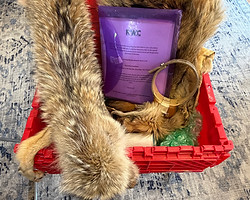
Courtesy: Red Wolf Coalition
Yes, I would like to mention our Red Wolf Discovery Boxes program.
These boxes are full of useful items, including artifacts, books, a video, a howling CD, and Far Traveler (the red wolf curriculum for kids of all ages). Students can see and touch pelts and skulls that show powerful jaws and teeth, a radiotracking collar, and books that can serve as resource materials that challenge students to learn more about red wolves. These are available free of charge; the only cost is for sending them back to the Coalition.
Are there any plans to send ambassadors into our schools to tell students about the Red Wolf recovery programs and how they can help?
I do a good bit of traveling into schools and classrooms, in person and virtually. It would be great to have a whole pack of ambassadors across the United States educating the public about Red Wolves. We have had some interest from people wanting to help and we hope in the near future to develop a solid training program.
Your Depredation Compensation Program is interesting and is one more way that you work with local communities regarding Red Wolves in the wild.
Yes, and this one is very interesting.
It was put in place 3 years ago and helps alleviate concerns regarding the taking of livestock by Red Wolves in the release areas. Thus far, two landowners have been compensated for non-wolf depredations that occurred on their property.
Anything else you want to mention about your efforts to educate the public?
There is the “Far Traveler: A Teacher’s Companion to Red Wolf Recovery,” a time-honored resource for educators. It provides activities in K-12 grades and allows educators to tailor it to their classrooms. This is another great resource and can be download it in PDF format or one can request a printed copy.
We also offer a scholarship to Columbia, (NC) High School students that need additional resources to start their college experience. These scholarships are another way that the Coalition shows its commitment to the community where we reside.

Far Traveler
As we start to wind down and leave you to your work, I just want to say that with all the government agencies and non-profits that participate in the efforts to conserve our wild Red Wolves, the Red Wolf Coalition is one of the non-profit partners that is working hard to ensure that the Red Wolf has a place to thrive in the wild. What words of hope and wisdom might you have for us about our wild red wolf population?

Alexis, I believe that the tolerance of humans has always been the biggest factor to the future of the Red Wolf. Understanding that coexistence can be achieved if all parties are willing to come together and work toward a mutually agreed upon outcome.
This may sound easy, but it is the hardest component of Red Wolf conservation. Understanding the concerns of people who live with wolves and using that information to develop a collaborative approach to Red Wolf conservation is one of the most important building blocks to success
Credit: Traci L. Sepkovic
The community must know that their voices are being heard and what they say matters. Without that simple understanding, the wild Red Wolf population’s chances of survival in the wild will a challenge.
Is it foreseeable that a time may come when it will no longer be necessary to release captive Red Wolves into the wild and to closely track and manage them?
Yes, I believe that one day the USFWS will step back and let the wolves do their thing. In 2005 there were about 130 Red Wolves in the wild and that may have been an opportunity to step back, but that was not the management directive at the regional level.
The Red Wolves know how to survive in the wild, but the question is whether humans will let them.

Credit: Traci L. Sepkovic
What a wonderful story here!
Just to think that by 1980 all of the remaining wild red wolves had been captured, and thanks to the efforts of all the institutions, agencies, and people committed to red wolf recovery, look at where we are today. It’s truly a monumental conservation effort and such an inspiring reminder of what’s possible when people come together to protect wildlife.
We hope stories like this continue to inspire future generations to care about and protect wildlife like the Red Wolf, and for those that would like to learn more about the mission of Champions for Wildlife, there is some information about us at the end of this Conversation.
RED WOLF COALITION
WEBSITE:
ADDRESS:
PHONE:
EMAIL:
DONATIONS:

Explore. Create. Protect
CONNECTING KIDS WITH WILDLIFE THROUGH ART
Champions for Wildlife helps elementary-aged children build curiosity, empathy, and care for native wildlife through hands-on art and education. Early creative moments with nature shape how children see, understand, and value the world around them.

Champions for Wildlife brings together wildlife and art to inspire the next generation to care for and protect the species that share their communities. This integration of art and science is central to the organization’s mission.
Whether students are sculpting wildlife, participating in nature journaling activities on an outdoor nature walk, or learning about species habitats through interactive experiences, they are encouraged to explore through curiosity, create through hands-on art, and begin building the kind of personal connection that can grow into care and protection over time.
Pollinator Foil Relief Artwork created by students in a
Champions for Wildlife Program
And it all began with Red Wolves, one of the most endangered animals in the U.S. Its founders, Loti Woods and Dale Weiler, wanted to help save them. Dale, a wildlife sculptor, made a beautiful stone sculpture of an American Red Wolf mom and pup and then donated over forty replicas to zoos and wildlife centers working to protect Red Wolves.

Dale Weiler's Red Wolf Sculpture "Just Setting In"

Today, Champions for Wildlife has greatly expanded on this original mission by teaching children about all kinds of animals, including pollinators, bats, hellbenders, and birds, as well as about Red Wolves.
The Champion’s website features one of the most extensive photo galleries of Red Wolves ever put together. Visit it at https://www.redwolfgallery.org/Galleries/Red-wolves
And while in-person classes are taught in Western NC, all children and their families have access to a “For Kids” section on the Champions for Wildlife website at https://championsforwildlife.org/for-kids/welcome.html
The entire family can learn about native species through their interactive online space, find art activities to complete at home, and learn how they can become Champions for underdog species.
Student sculpting a Red Wolf in a
Champions for Wildlife Wild for Art Program
Find Your Way to Make a Difference: Whether you love to create, teach, volunteer, or give, there’s a place for you in the Champions for Wildlife family. By sharing your time, talents, or support, you help kids connect with wildlife, express themselves through art, and care more deeply about the world around them.
Explore the ways you can make a difference at
https://championsforwildlife.org/get-involved/ and pick the path that fits your passion.
CHAMPIONS FOR WILDLIFE
WEBSITE: https://championsforwildlife.org
ADDRESS: P.O. Box 128, Lynn, NC, 28750
HAVE A QUESTION: Use our contact us form at
https://championsforwildlife.org/about-us/contact-us.html and will be sure to get back to you soon.